> ## Documentation Index
> Fetch the complete documentation index at: https://docs2.travtus.com/llms.txt
> Use this file to discover all available pages before exploring further.
# Customer Experience Scoring
Understanding Customer Scores:
**How to get there**
The customer experience score can be seen in a number of places:
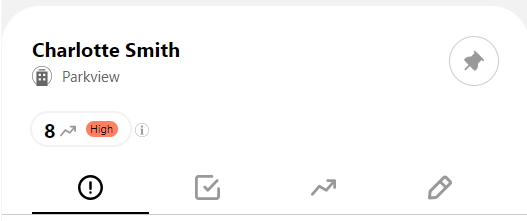
* You'll see a **number in the top left underneath customer names** when on a customer page, along with a trend icon
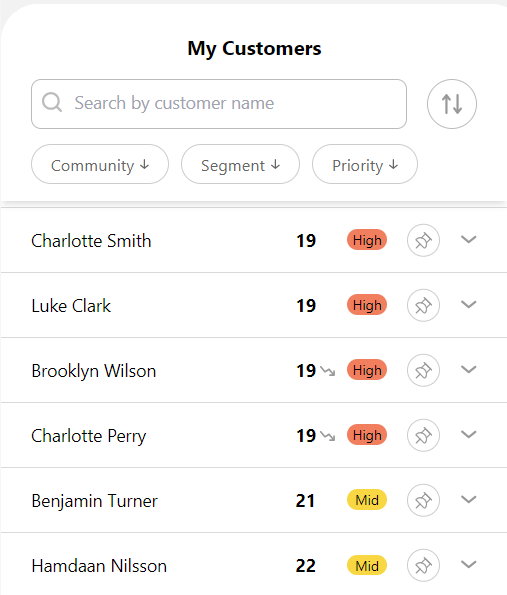
 * Also in the list of customers (accessed by using the menu in the top right and selecting **My Customers**), you will see a number and trend icon alongside each customer's name. You can also **sort the list by this metric** by clicking the sort icon to the right of the search box and then selecting Score.
 # **How to interpret**
The customer experience scoring system systematically rates and classifies customers based on their level of engagement and satisfaction. This scoring system is crucial to understanding how customers are feeling, which helps to create a positive living atmosphere and boosts customer retention. Customers are evaluated on a **scale of 0-100** and **ranked within your overall portfolio** (i.e. not within their community).
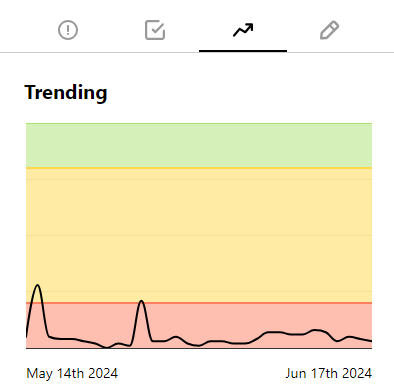
You can see a chart showing how their experience has**trended over time** - and if you go to the **Conversation History** tab, you can see what they contacted about on specific dates to get an idea of what might have caused any big decreases or increases
# **How to interpret**
The customer experience scoring system systematically rates and classifies customers based on their level of engagement and satisfaction. This scoring system is crucial to understanding how customers are feeling, which helps to create a positive living atmosphere and boosts customer retention. Customers are evaluated on a **scale of 0-100** and **ranked within your overall portfolio** (i.e. not within their community).
You can see a chart showing how their experience has**trended over time** - and if you go to the **Conversation History** tab, you can see what they contacted about on specific dates to get an idea of what might have caused any big decreases or increases
 ## **How does customer experience scoring work?**
Data is collected by actively observing and updating customer satisfaction levels daily. This ensures a real time, accurate portrayal of customers’ feelings and behaviors.
The scores range from 0-100 based on the following factors:
* **Frequency** of customer interactions
* The **nature** and **tone** of all encounters (i.e. grievances vs. commendations)
* The **variety of issues** reported by customers
* The **persistence** of any reported problems
* **How recently** their experiences occurred
Customers are rescored on a daily basis, and separated into residents and prospects before ranking.
## **Benefits**
1. Regular scoring supports strategic insights into property operations and customer satisfaction, which are key for customer retention.
2. The scoring framework provides an intuitive understanding of each property’s standing, allowing for timely, strategic interventions.
3. Comparisons between properties can help with prioritization and operational decisions, including resource distribution.
4. Property scores set benchmarks for evaluating the impact of changes and initiatives over time.
## **How does customer experience scoring work?**
Data is collected by actively observing and updating customer satisfaction levels daily. This ensures a real time, accurate portrayal of customers’ feelings and behaviors.
The scores range from 0-100 based on the following factors:
* **Frequency** of customer interactions
* The **nature** and **tone** of all encounters (i.e. grievances vs. commendations)
* The **variety of issues** reported by customers
* The **persistence** of any reported problems
* **How recently** their experiences occurred
Customers are rescored on a daily basis, and separated into residents and prospects before ranking.
## **Benefits**
1. Regular scoring supports strategic insights into property operations and customer satisfaction, which are key for customer retention.
2. The scoring framework provides an intuitive understanding of each property’s standing, allowing for timely, strategic interventions.
3. Comparisons between properties can help with prioritization and operational decisions, including resource distribution.
4. Property scores set benchmarks for evaluating the impact of changes and initiatives over time.